
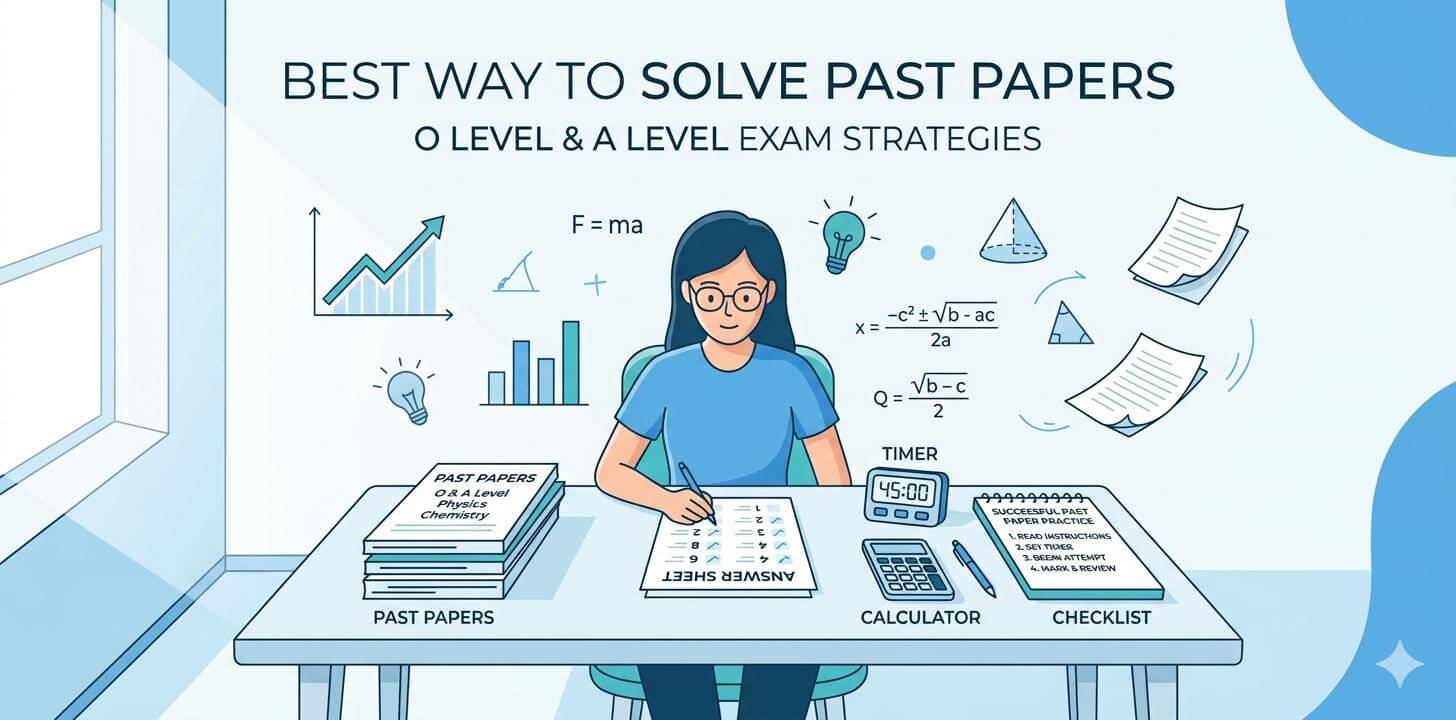
A practical guide to using past papers correctly so students can improve accuracy, speed, confidence, and exam performance.
Past papers are one of the most important parts of exam preparation, but many students do not use them in the right way. Some solve papers only to complete them, while others start too early without building their concepts first. The best way to use past papers is to make them part of a clear study strategy. When used properly, they help students understand exam patterns, improve time management, and become more confident before the final exam.
Build Concepts Before Starting Full Papers
Past papers are most useful when students already understand the main concepts of the subject. If the basics are weak, full papers can feel frustrating and overwhelming. Before starting serious past paper practice, students should make sure they are comfortable with the major topics, formulas, and question styles. Strong concepts make past paper practice much more effective.
Start with Topic-Wise Practice
A smart way to begin is by solving questions topic by topic instead of doing full papers immediately. This allows students to focus on specific weak areas and improve them one at a time. Topic-wise past paper practice also makes it easier to see which chapters need more revision. Once students feel stronger in individual topics, they can move on to complete papers.
Solve Full Papers Under Timed Conditions
After enough topic-wise preparation, students should begin solving full past papers under proper exam timing. This helps them practise speed, concentration, and time management. Many students know the answers but still lose marks because they are too slow or do not manage their time well. Timed practice helps them adjust to real exam pressure.
Check with the Mark Scheme Carefully
One of the biggest mistakes students make is solving papers without reviewing them properly. The mark scheme is essential because it shows how marks are awarded, what wording is expected, and which steps matter most. Students should compare their answers with the mark scheme carefully and note where they lost marks. This is where real improvement happens.
Keep a Record of Mistakes
Students improve faster when they track their common mistakes. Keeping a small notebook or list of repeated errors can be very useful. These mistakes may include weak topics, careless calculation errors, missing units, poor wording, or time management problems. Reviewing this list regularly helps students avoid repeating the same mistakes in future papers.
Focus on Progress, Not Just Completion
The goal of past papers is not simply to finish as many as possible. The goal is to improve with each paper. Students should aim to become more accurate, faster, and more confident over time. Solving fewer papers with proper review is often much more useful than solving many papers without reflection. Quality of practice matters more than quantity alone.
Final Thoughts
Past papers can make a huge difference in O Level and A Level preparation when used in the right way. Students who combine concept clarity, topic-wise practice, timed papers, mark scheme review, and mistake analysis usually improve much faster. With a smart and structured approach, past papers become one of the strongest tools for exam success.
Need help with exam preparation?
Book a free trial class and learn how to use past papers effectively with a structured, exam-focused approach.